Why the Best CEOs Let Someone Else Manage Their Time

There's a quiet assumption in business that the most successful people simply have more discipline, or more energy, or work longer hours than everyone else. In reality, the opposite is usually true. The founders and CEOs who seem to have more time than their peers have almost always done one thing differently: they've stopped managing their own time, and handed it to someone who can do it properly.
The real cost of an unprotected diary
Ask most CEOs how their calendar got built, and the honest answer is: piece by piece, by whoever asked first. Back-to-back meetings. No thinking time. No buffer for travel or preparation. No filter for what actually needs their presence in the room.
This isn't a minor inconvenience, it's a structural problem. Every meeting that doesn't need a CEO's judgement is time stolen from the two or three decisions that actually do. A diary built reactively rewards whoever shouts loudest, not what matters most.
A good executive assistant changes that dynamic entirely. They don't just schedule they protect. They ask "does this actually need you in the room?" before it ever reaches your calendar. That single question, asked consistently, can reclaim hours every week.
Preparation is where the real time gets lost
It's not just the meetings themselves. It's walking into them unprepared.
The best meeting a leader will ever have is the one where they already know the answer before they sit down. That requires someone briefing them in advance who's in the room, what they care about, what outcome is needed, and what could go wrong.
Five minutes of preparation saves an hour of recovery. Without it, leaders spend meetings gathering context they should have had beforehand, and spend the following hours cleaning up decisions made without the full picture.
The follow-through gap
After a big pitch, a board meeting, or a difficult conversation, most founders move straight on to the next thing. Nothing gets debriefed. Actions don't get captured. Follow-ups don't get sent.
A great EA stops that from happening. A five-minute debrief after significant meetings means nothing falls through the gap and it means the next meeting goes better, because lessons actually get captured instead of repeated.
It's not about more hours. It's about better ones.
This is the core distinction that separates leaders who seem constantly overwhelmed from those who don't: it was never really about finding more time. It's about what happens to the hours you already have.
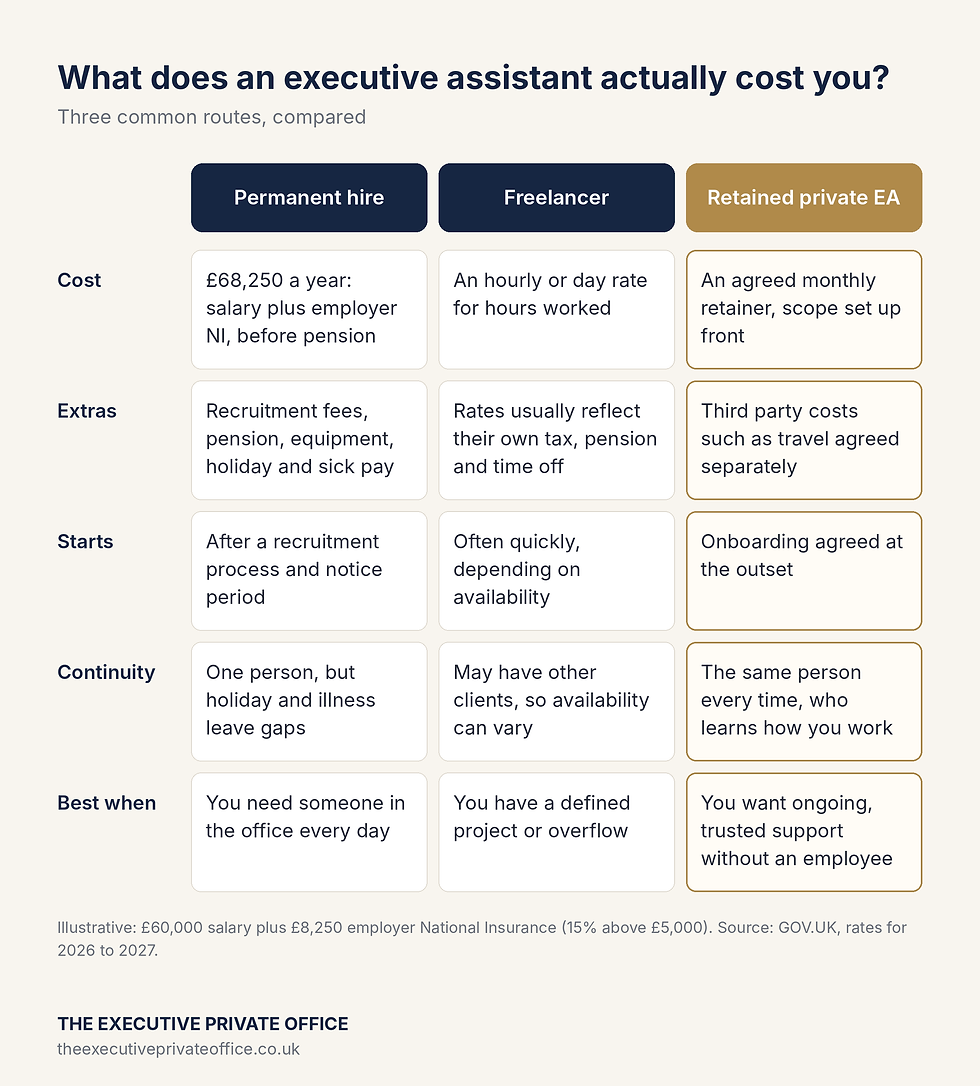
The founders who seem to have more time than everyone else are not working longer. They have systems, boundaries, and someone making sure the right things land on their desk at the right moment. A private executive assistant isn't a luxury add-on for a leader at the right stage, it's a genuine multiplier on their time.
What would you do with five more focused hours a week?
That's not a rhetorical question. For most CEOs, the honest answer involves strategic work that's currently being crowded out by admin, unfiltered meetings, and unprepared conversations. Reclaiming that time isn't about working harder. It's about deciding who or what is allowed to take it from you in the first place.
Curious what retained executive support actually looks like in practice? Speak to The Executive Private Office about diary and inbox management built around how you actually work.


Comments