How to Brief a Private EA So They Get It Right First Time

Delegation Is a Skill, Not an Instinct
Most founders learn to delegate the hard way, by delegating badly first. A rushed instruction, a missing piece of context, and the task comes back wrong, or worse, it comes back technically correct but useless because the brief never said what actually mattered. The good news is that briefing well is a skill like any other. It can be learned, and it makes an enormous difference to how well a private office or executive assistant can support you.
Start With the Outcome, Not the Task
A weak brief describes the task. A strong brief describes the outcome. Book me a flight to Zurich is a task. I need to be in Zurich by nine on Thursday morning, rested enough to walk straight into a board meeting, and I would rather pay more than change terminals twice, is an outcome. The second version gives an assistant everything they need to make good judgement calls without checking back in every five minutes.
Say What You Actually Care About
Every founder has quiet preferences they assume are obvious. They are not obvious to someone new. Do you want to be told about a problem the moment it happens, or only once a solution is attached. Would you rather a slightly plainer hotel with a decent gym, or the reverse. Preferences like these, once written down and shared, save months of small corrections later on.
Give Permission to Decide
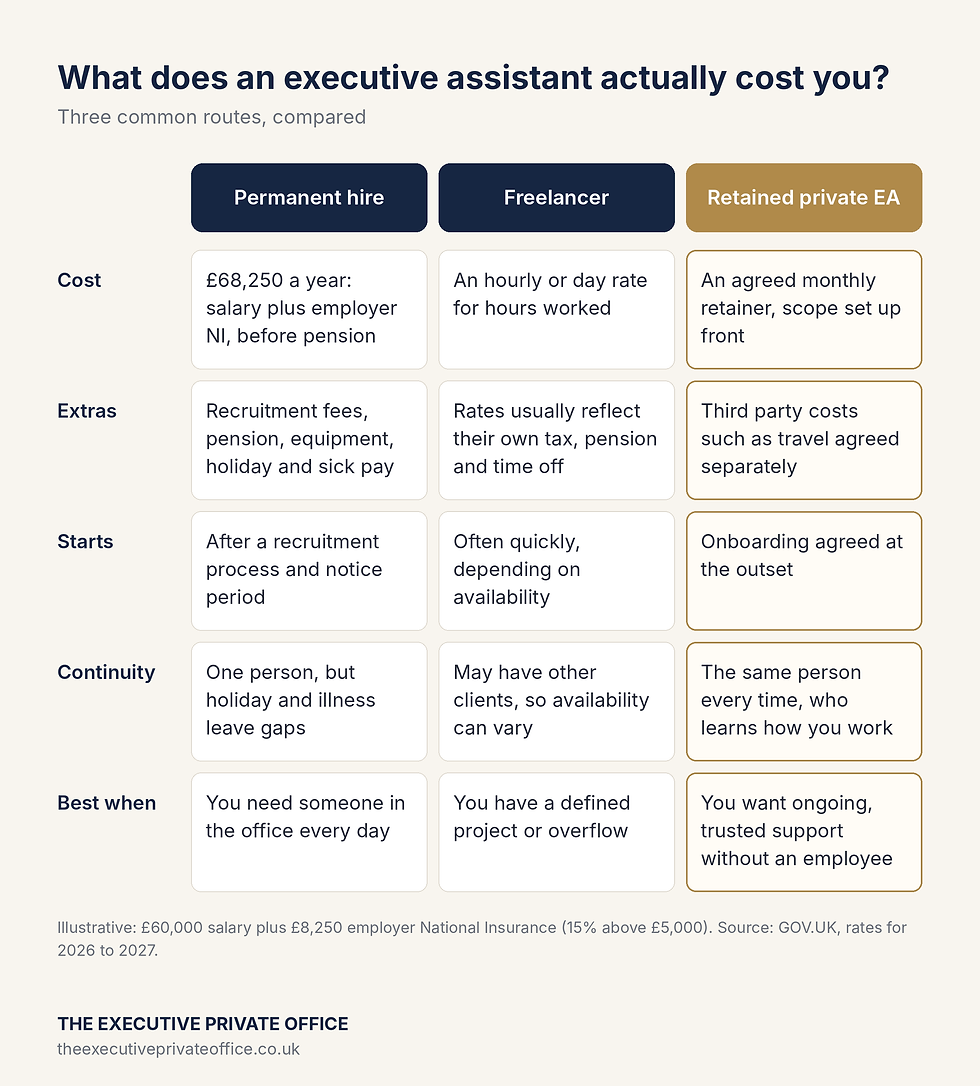
The biggest brake on a good assistant is a founder who has to approve everything. Part of a good brief is deciding, in advance, where the line sits. Below a certain spend, or within a certain set of options, let them decide without asking. This is exactly the thinking behind the case for a retained executive assistant. The value increases sharply once an assistant understands you well enough to act without waiting for permission on every small thing.
Review, Then Let Go
The first few weeks of working with anyone new will involve a bit of correction. That is normal and not a sign that it is not working. Give feedback quickly and specifically, then let go of the task. Founders who keep checking every detail long after trust should have been established end up doing the work twice, once themselves and once through someone else, which defeats the entire point of delegating in the first place.
Briefing well is only half the equation. The other half is having someone experienced enough to work from a good brief without needing everything spelled out twice.


Comments